

Jinshan PM602: Technology and Application of Advanced Chelating Resin in Rhenium Extraction
I.Technical Overview
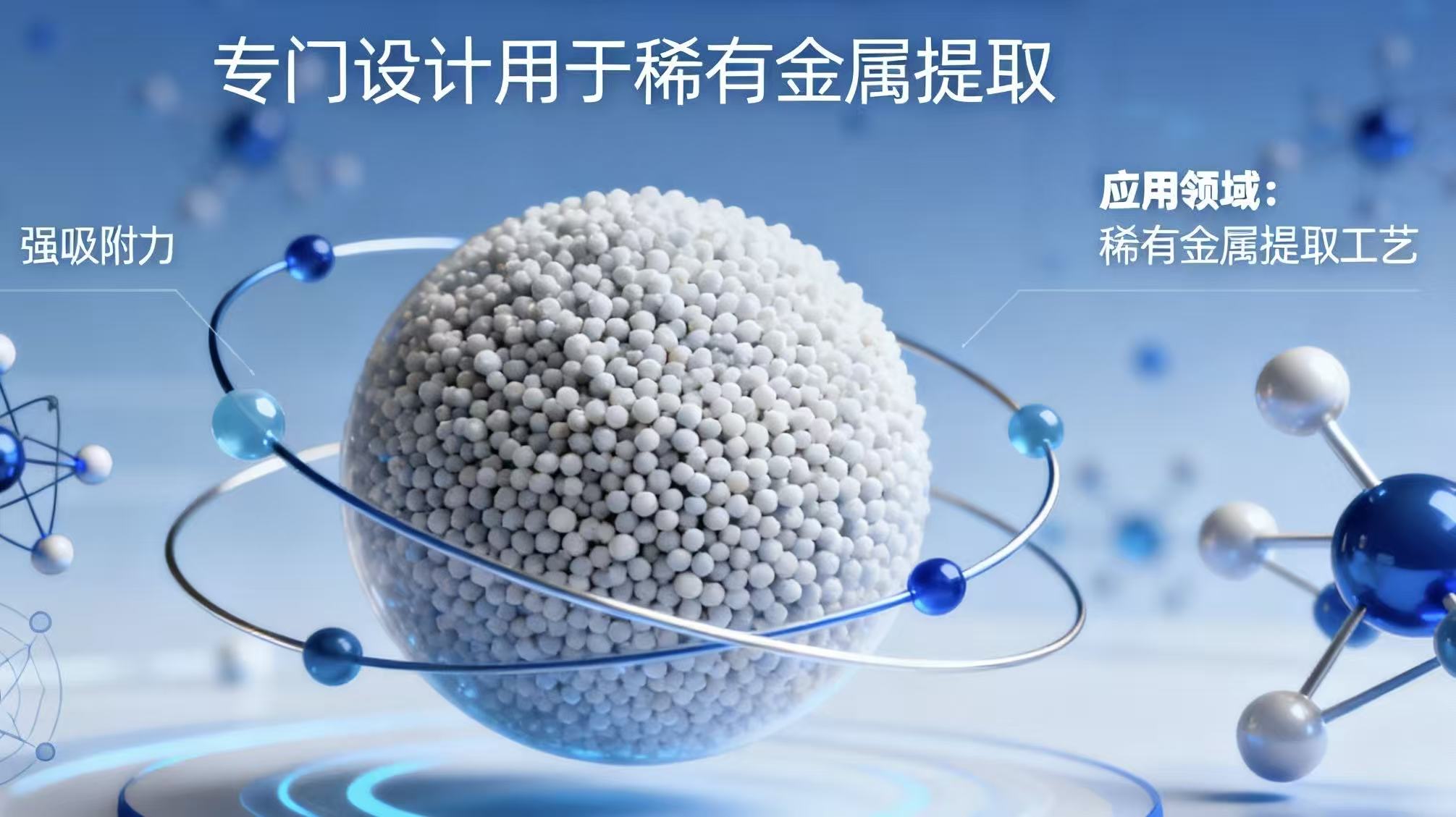
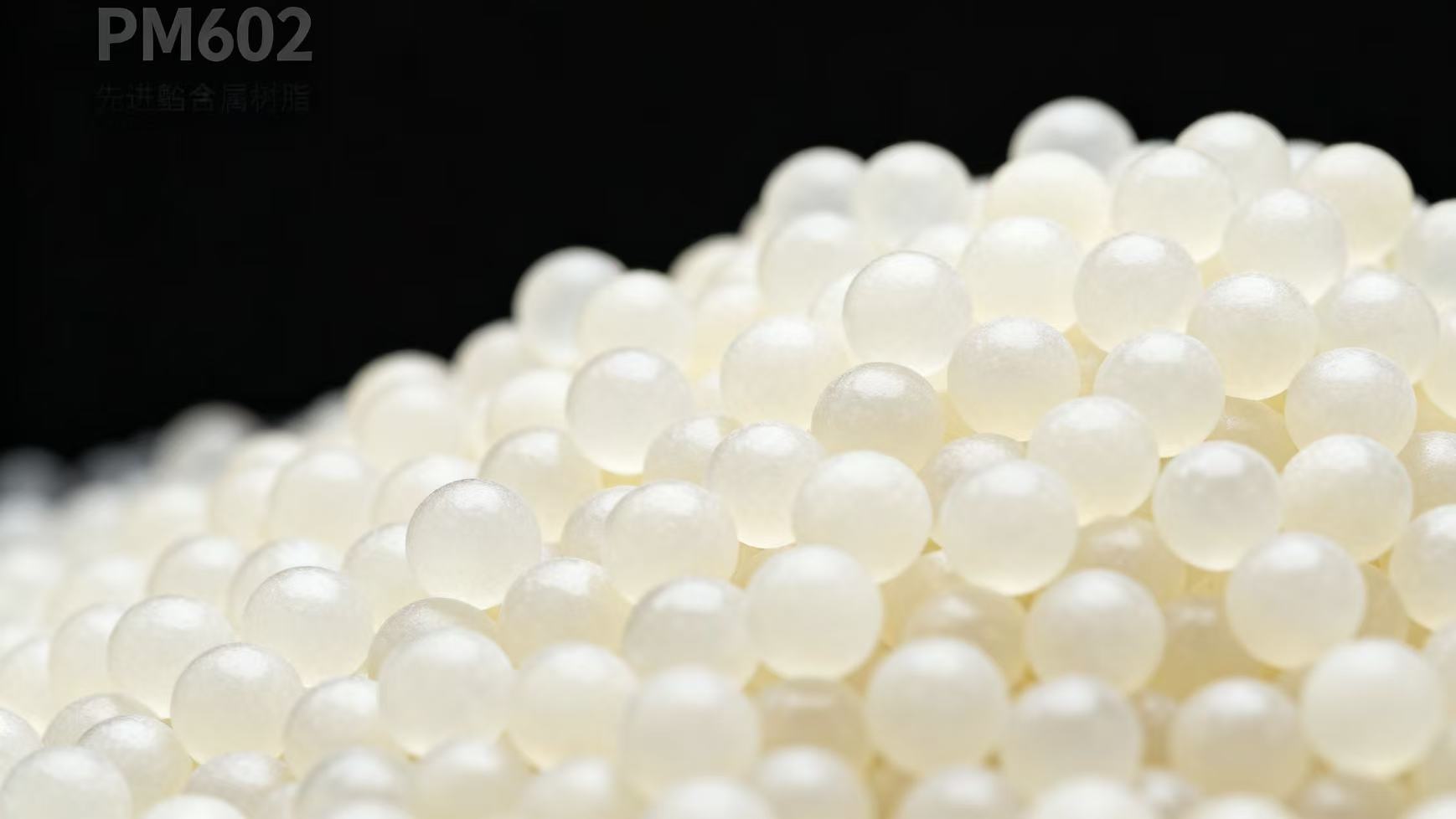
The Jinsan PM602 is an advanced chelating resin specifically designed for the extraction of rare metals. Its core technology lies in a molecular structure with special functional groups that can form stable coordination compounds with rhenium ions. In the field of hydrometallurgy, this type of chelating resin, containing specific functional groups, can efficiently capture target rhenium metal ions from complex solution environments due to its high selectivity and strong adsorption capacity.
II. Application Scenarios
The Jingshan PM602 chelating resin has wide application value in the field of rhenium extraction, mainly used in the following scenarios:
① Primary Molybdenum Ore Processing: During molybdenum smelting, rhenium, as an associated element, often exists in the form of perrhenate ions in the leach solution of roasting off-gas. PM602 resin can efficiently and selectively adsorb rhenium from this complex solution system. Even when the rhenium concentration is only at the milligram-per-liter level, it still maintains excellent recovery rates while effectively separating molybdenum from rhenium.
② Rhenium-containing Waste Recovery: With increasing attention to secondary resource utilization, PM602 resin performs exceptionally in recovering rhenium from regenerated resources such as rhenium-containing waste catalysts and alloy scrap. Rhenium in these wastes usually exists in multiple chemical forms, and the resin's multifunctional group design can accommodate this complexity, achieving efficient rhenium recovery.
③ Low-grade Resource Development: Facing the challenge of depleting traditional mineral resources, PM602 resin makes it possible to economically extract rhenium from low-grade ores and unconventional resources. Its high selectivity and adsorption capacity significantly reduce the cost of processing low-concentration rhenium solutions, providing the technical means to develop and utilize rhenium resources previously considered economically unviable.
Application scenario | Initial concentration range of rhenium | Suitable pH range | Adsorption capacity (mg Re/g resin) | Recovery Rate (%) |
Molybdenum Smelting Leaching Solution | 10 to 200 milligrams per liter | 2-4 | 45-60 | 95-99 |
Spent catalyst leachate | 50 to 500 milligrams per liter | 1-3 | 55-70 | 92-97 |
Low-grade ore leachate | 1 to 50 milligrams per liter | 2-5 | 30-45 | 85-95 |
Table: Comparison of Operating Conditions and Effects of Jinsan PM602 Resin in Different Application Scenarios
III. Practical Case Study
In a rhenium recovery project at a large molybdenum smelting enterprise, the application of Golden Fir PM602 chelating resin achieved remarkable results. The company previously faced technical challenges in recovering rhenium from the wash solution of molybdenum roasting flue gas. Traditional ion exchange resins had poor selectivity and low adsorption capacity, resulting in unstable rhenium recovery rates and high production costs.
During the implementation of the project, technicians used a fixed-bed adsorption system centered on Golden Fir PM602. The specific process was as follows: the flue gas wash solution, adjusted to a pH of around 3.5, was passed through a PM602 resin-packed column at a specific flow rate. Special functional groups in the resin selectively adsorbed perrhenate ions. When the resin approached adsorption saturation, a desorbing agent was used to elute the rhenium enriched on the resin. The resulting rhenium-rich solution was further processed through crystallization, ultimately yielding high-purity ammonium perrhenate product.
Data from this application case indicate that the PM602 resin has an adsorption capacity of 58 mg Re/g resin. Under an initial rhenium concentration of only 85 mg/L, the recovery rate reached 97.5%, while the molybdenum-rhenium separation factor exceeded 1500, demonstrating excellent selectivity. Compared with the previous technology, the PM602 resin not only increased the rhenium recovery rate by nearly 30%, but also greatly reduced production costs and wastewater discharge, achieving both economic and environmental benefits.